
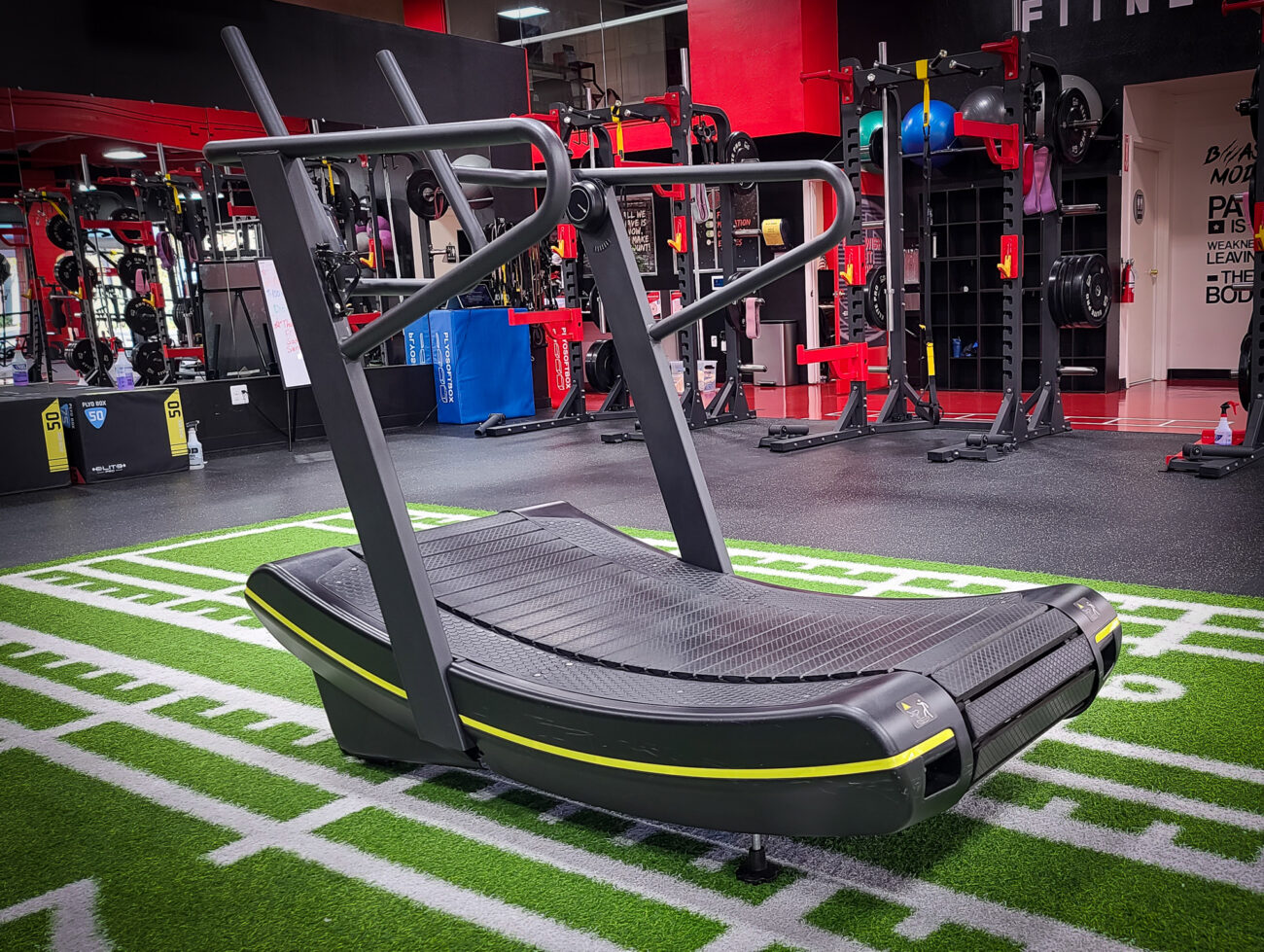
The fitness industry has witnessed countless innovations over the decades, from high-tech smartwatches to AI-powered workout programs. Yet one of the most impactful developments in recent years is refreshingly low-tech: the curved treadmill. This motorless marvel, with its distinctive concave running surface, is transforming how athletes train and how everyday fitness enthusiasts approach their cardio workouts.
Unlike traditional motorized treadmills that move beneath your feet at a preset speed, curved treadmills rely entirely on your own power. The unique curved design creates a natural running experience that closely mimics outdoor terrain while delivering benefits that extend far beyond what conventional treadmills can offer.
The Biomechanics Advantage
One of the most significant benefits of curved treadmills lies in how they affect your running form. The curved surface naturally encourages a forefoot or midfoot strike rather than the heel-striking pattern that often develops on motorized treadmills. This shift in foot strike pattern reduces impact forces through your joints and promotes a more efficient running gait.
The design also prevents overstriding, a common problem where runners land with their foot too far in front of their center of mass. On a curved treadmill, overstriding simply doesn’t work because you need to stay positioned on the curve to maintain momentum. This self-correcting mechanism helps runners develop better form without conscious effort, making it an excellent tool for both beginners learning proper technique and experienced runners looking to refine their stride.
Additionally, the curved surface engages your posterior chain more effectively than flat treadmills. Your glutes, hamstrings, and calves work harder to drive the belt and maintain your position on the curve. This increased muscular engagement translates to greater strength development and better running economy over time.
Superior Calorie Burn and Metabolic Impact
Research has consistently shown that curved treadmills demand significantly more energy expenditure than their motorized counterparts. Studies indicate that running on a curved treadmill can burn up to thirty percent more calories than running at the same perceived effort on a traditional treadmill.
This increased caloric expenditure stems from multiple factors. First, you’re powering the belt entirely through your own effort rather than simply keeping pace with a motor. Second, the engagement of additional muscle groups requires more energy. Third, the constant micro-adjustments your body makes to maintain position and balance on the curved surface add to the metabolic demand.
For those looking to maximize their workout efficiency, this means shorter sessions can yield comparable or superior results to longer workouts on standard treadmills. High-intensity interval training becomes particularly effective on curved treadmills, as the ability to quickly accelerate and decelerate without touching any buttons allows for seamless transition between work and recovery periods.
Self-Paced Training and Mental Engagement
Perhaps one of the most liberating aspects of curved treadmills is their self-paced nature. There’s no motor dictating your speed, no buttons to press when you want to speed up or slow down. You simply run faster or slower based on your position on the curve and your effort level. Leaning forward and driving harder accelerates the belt, while easing back slows it down.
This intuitive control creates a more engaging and responsive workout experience. You’re constantly in tune with your body, making split-second adjustments based on how you feel rather than adhering to a predetermined speed. This increased mental engagement can make workouts feel shorter and more enjoyable while developing better body awareness and proprioception.
The self-paced nature also makes curved treadmills ideal for interval training. Transitioning from recovery to sprint requires no button pushing or waiting for the belt to catch up. You simply accelerate when ready and recover when needed, creating a more natural and fluid workout experience.
Reduced Joint Impact and Injury Risk
Despite the increased intensity and caloric burn, curved treadmills can actually be gentler on your joints than traditional treadmills when used properly. The improved running mechanics they promote reduce the repetitive stress that often leads to common running injuries like shin splints, runner’s knee, and plantar fasciitis.
The shock-absorbing qualities of the curved belt also help dissipate impact forces. Many curved treadmills feature slatted running surfaces that provide natural cushioning while still maintaining a firm, responsive feel. This combination allows for a training surface that protects your joints without compromising the proprioceptive feedback necessary for developing strong, stable movement patterns.
Athletic Performance Enhancement
For serious athletes, curved treadmills offer unique training advantages. The increased resistance and demand for power output make them excellent tools for developing speed, acceleration, and anaerobic capacity. Sprint training on a curved treadmill closely mimics the demands of track sprinting or field sport movements, making it highly transferable to athletic performance.
The constant resistance also builds mental toughness. Unlike a motorized treadmill where you can zone out while the belt carries you along, a curved treadmill demands your full attention and effort. Every step requires active engagement, developing the mental fortitude that translates directly to competitive situations.
Environmental and Practical Benefits
From a practical standpoint, curved treadmills eliminate electricity costs associated with motorized models. This makes them environmentally friendly and cost-effective over their lifespan. They also tend to be more durable with fewer mechanical components that can fail, reducing maintenance requirements and long-term ownership costs.
Conclusion
The curved treadmill represents a return to the fundamental simplicity of running while incorporating intelligent design that enhances the experience. By removing the motor and adding the curve, this equipment transforms indoor running from a passive activity into an engaging, biomechanically sound, and highly effective training modality. Whether you’re an elite athlete seeking performance gains, a fitness enthusiast looking to maximize calorie burn, or someone recovering from injury who needs to rebuild proper movement patterns, the curved treadmill offers compelling benefits that traditional equipment simply cannot match.
