
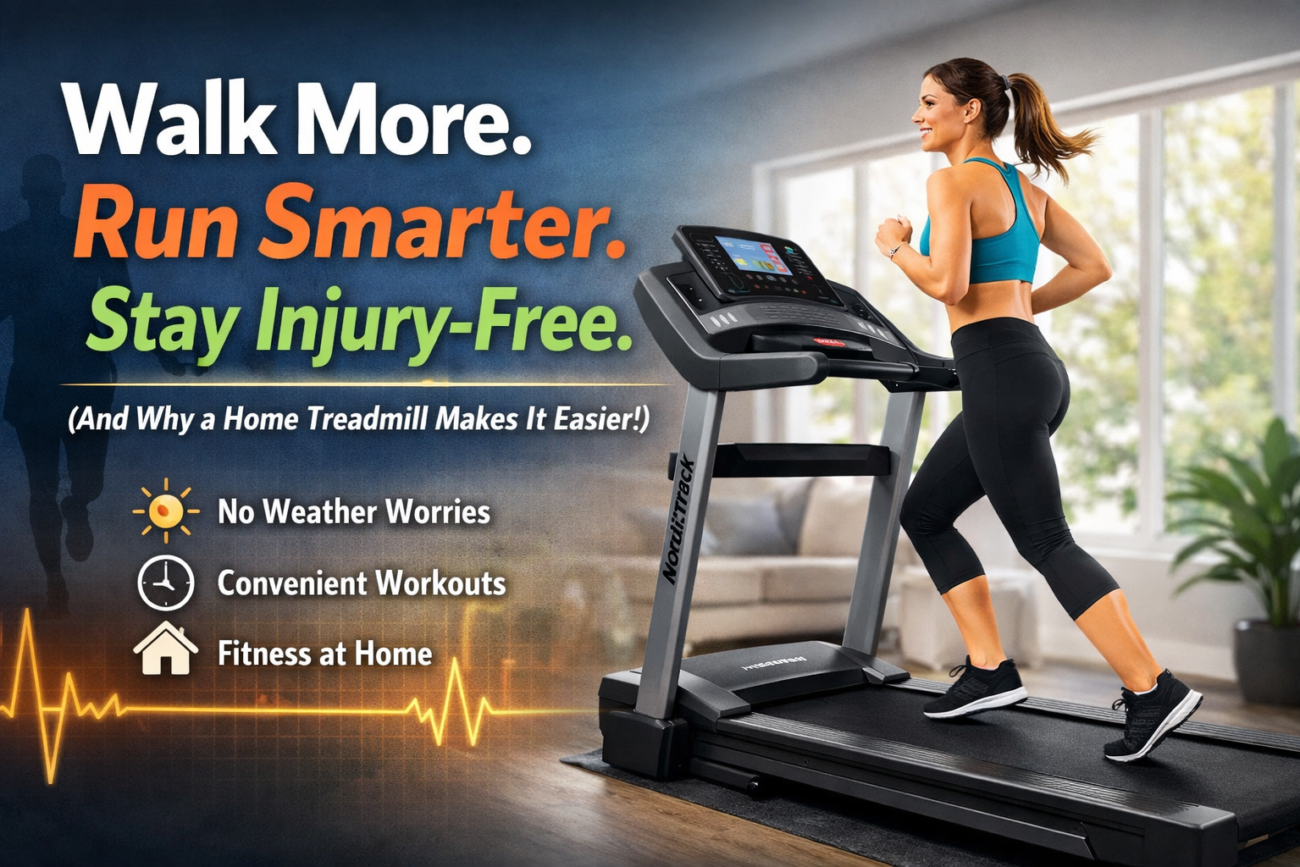
Walking and running are two of the highest “return on effort” habits you can build. They improve cardiovascular fitness, support weight management, strengthen bones and connective tissue, and—most importantly—help you stay consistent because they’re simple and scalable. Major public-health guidelines consistently recommend at least 150 minutes/week of moderate activity (like brisk walking) or 75 minutes/week of vigorous activity (like running), plus strength work twice weekly.
A treadmill can make those targets dramatically easier to hit because it removes the biggest consistency killers: weather, darkness, commute time, and gym crowds.
Why walking and running matter
1) Consistency beats intensity
If you can’t do it repeatedly, it doesn’t work. Walking is low impact, easy to recover from, and builds an aerobic base that supports running. Running adds a higher stimulus for cardio fitness and stamina.
2) The “dose” that works
For most adults, evidence-based targets sit around 150–300 minutes/week moderate (or 75–150 vigorous) for substantial health benefits.
That’s achievable with a treadmill.
How to avoid injuries (the basics that actually work)
Most treadmill injuries are not from the treadmill—they’re from doing too much, too soon, poor warm-up habits, weak supporting muscles, and repetitive loading without enough recovery.
The 5 injury-prevention rules
- Warm up dynamically (don’t start cold).
Dynamic warm-ups are widely recommended because they prepare joints, tissues, and the nervous system for movement better than “cold stretching.” - Progress gradually.
Increase time, speed, and incline in small steps (see “progression plan” below). Sudden jumps drive shin splints, Achilles irritation, calf strains, and knee pain. - Use incline strategically (don’t live at 0% or 10%).
A small incline is often more natural-feeling for runners; higher incline is great for walking intensity—but overusing it can overload calves/Achilles if you’re not adapted. - Strengthen the support system (2x/week).
Glutes, calves, hamstrings, and core stability reduce “compensation running.” Even 15–20 minutes twice weekly helps. - Respect pain signals.
“Muscle burn” is normal. Sharp, localized, worsening pain is not.
What to do BEFORE walking or running (5–8 minutes)
Step 1 — Easy ramp (2–3 minutes)
- Start with a slow walk.
- Gradually increase pace until you’re breathing a bit harder but can still talk.
Step 2 — Dynamic warm-up (2–4 minutes)
Pick 4–6 moves, 20–30 seconds each:
- Ankle circles + calf pumps
- Leg swings (front/back, side/side)
- Marching knee lifts
- Hip circles
- Bodyweight squats (easy depth)
- Glute bridges (10 reps)
This approach aligns with evidence that dynamic warm-up supports performance readiness and may reduce injury risk.
Step 3 — “First 5 minutes rule”
Make your first 5 minutes of the workout “easy” even if you’re doing intervals later.
What to do AFTER walking or running (5–10 minutes)
Step 1 — Cool down (3–5 minutes)
- Walk slowly until your breathing returns near-normal.
Cooling down is commonly recommended to help your body transition smoothly after aerobic work.
Step 2 — Mobility + optional light stretching (2–5 minutes)
- Calf stretch, hip flexor stretch, hamstring stretch (gentle, not aggressive)
Stretching is best done when muscles are warm (after warm-up or after training).
Step 3 — Recovery basics
- Hydrate
- If you’re increasing volume, prioritize sleep
How to increase time on the treadmill (without flare-ups)
Use a simple weekly ramp. Do not increase speed, incline, and time all at once. Pick one lever.
Beginner plan (walking → walk/jog)
Week 1: 20 minutes, 3–4 days/week
Week 2: 25 minutes, 3–4 days/week
Week 3: 30 minutes, 4 days/week
Week 4: 35 minutes, 4 days/week
If you want to add jogging:
- Start with 1 minute jog + 2 minutes walk repeated 6–8 times
- Keep it easy; you should finish feeling like you could do more
Simple rule
If you feel beat up, keep the same duration next week and improve comfort, not mileage.
How to increase stamina (the 3-workout system)
To build endurance safely, rotate these three session types:
1) Easy base (most important)
- 20–45 minutes at an easy pace
- You should be able to speak in full sentences
2) Incline walk (low-impact intensity)
- 20–30 minutes
- Alternate incline blocks (example: 2 minutes incline + 2 minutes flat)
3) Light intervals (1x/week max at first)
- Warm up 8 minutes
- 6–10 rounds: 30–60 sec faster / 60–90 sec easy
- Cool down 5 minutes
This structure builds aerobic capacity without constantly “redlining,” which is where many treadmill runners get injured.
Why a treadmill helps you stick with it (and what to look for)
A treadmill is a consistency tool. For most people, adherence is the missing ingredient—not knowledge.
What matters most when choosing a treadmill
- Stable frame (less wobble, safer footing)
- Comfortable deck / cushioning (especially for knees/ankles)
- Incline range for low-impact intensity
- Speed range that matches your training
- Running belt length (55″ is a common minimum for comfortable home running)
Public-health guidelines emphasize consistent weekly activity, and a home treadmill is one of the easiest ways to remove barriers and hit those targets.
Recommended pick for home walking + running: NordicTrack T Series (NTL17624)
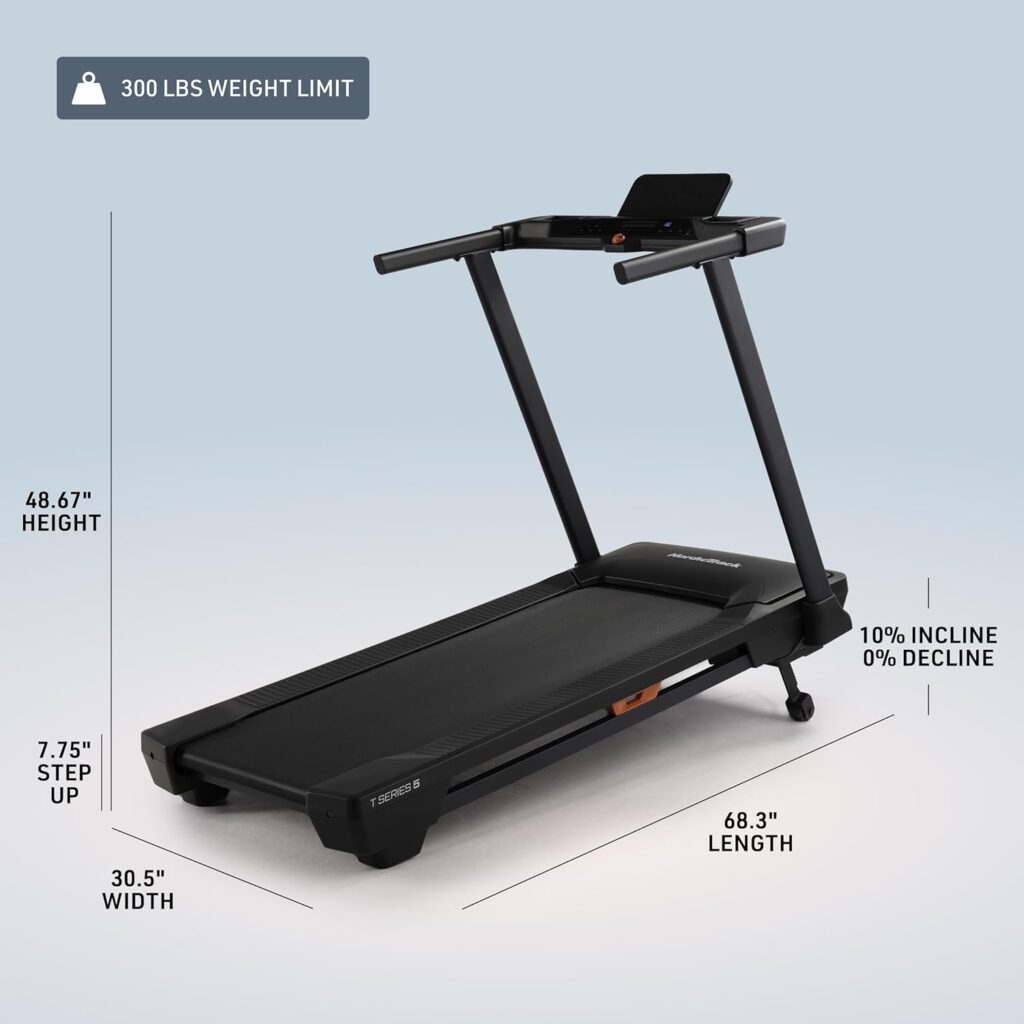
If you want a treadmill that covers the fundamentals for real-life home training, the NordicTrack T Series is a strong fit:
- 0–10 MPH speed for walking, jogging, and running
- 0–10% incline for calorie burn and endurance building
- KeyFlex cushioning for reduced joint impact
- 5″ LCD + device shelf (simple stats + bring your own tablet/phone)
- Optional iFIT ecosystem for guided workouts and auto-adjusting sessions (membership required)
