
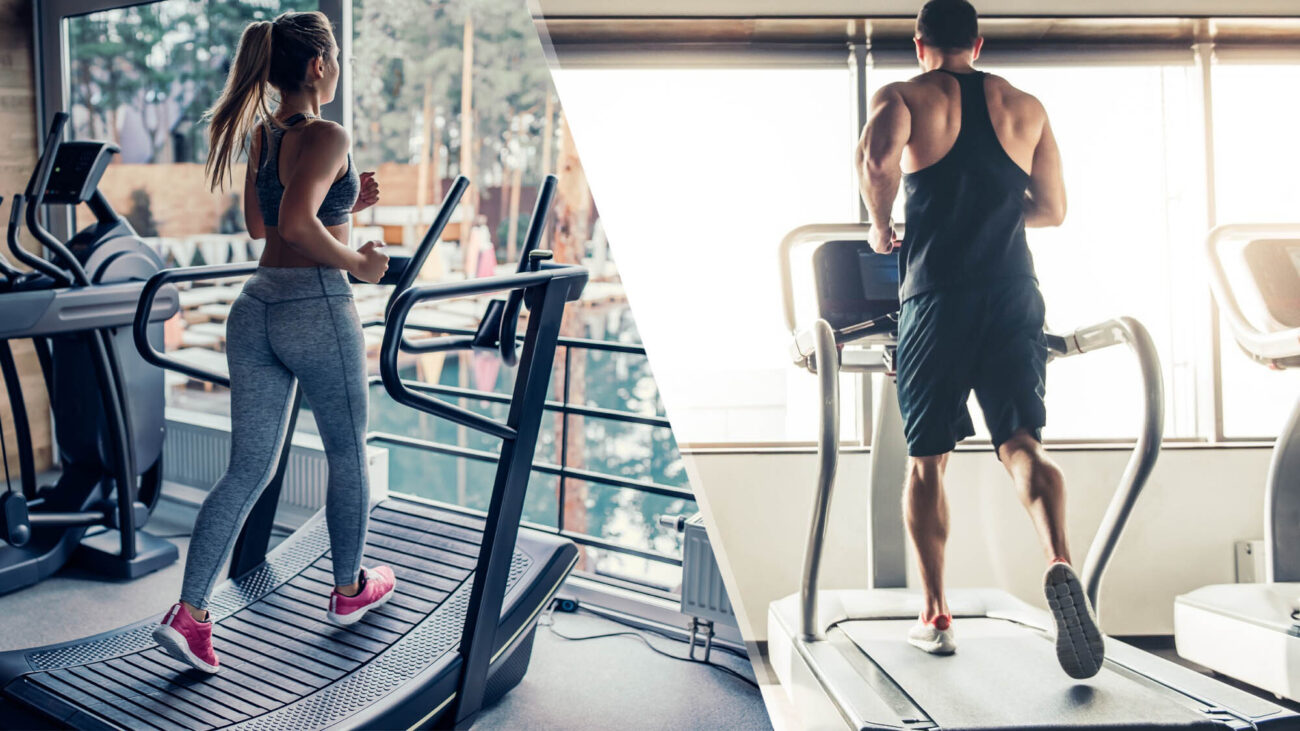
The treadmill has long been a staple of cardiovascular fitness, offering a convenient way to run regardless of weather, time of day, or safety concerns. But in recent years, a new contender has emerged to challenge the dominance of traditional motorized treadmills: the curved treadmill. This innovative design has sparked considerable debate among runners, fitness enthusiasts, and trainers about which type delivers superior results. Understanding the fundamental differences between curved and flat treadmills can help you make an informed decision about which best suits your fitness goals and training needs.
The Fundamental Design Difference
At first glance, the distinction is obvious. Traditional flat treadmills feature a horizontal running surface powered by an electric motor that moves the belt at your selected speed. You set the pace, press start, and the machine does the work of moving the belt beneath your feet.
Curved treadmills eliminate the motor entirely. Instead, they feature a concave running surface that curves upward at both ends, creating a bowl-like shape. The belt moves only when you run, powered entirely by your own effort. Your position on the curve and your stride determine the speed—lean forward and push harder to accelerate, ease back to slow down. This self-powered design creates a fundamentally different running experience with distinct advantages and limitations.
Biomechanics and Running Form
One of the most significant differences between curved and flat treadmills lies in how they affect your running mechanics. Curved treadmills naturally promote a forefoot or midfoot strike pattern, encouraging you to land on the ball of your foot rather than your heel. This occurs because the curved surface makes heel-striking inefficient and uncomfortable. The design essentially coaches you into better form without conscious thought.
Traditional flat treadmills, conversely, often encourage heel-striking, particularly when runners settle into a comfortable pace. While heel-striking isn’t inherently problematic for everyone, many running coaches and physical therapists consider forefoot striking more efficient and less likely to contribute to certain repetitive stress injuries.
The curved surface also prevents overstriding—landing with your foot too far ahead of your center of mass. On a flat treadmill, you can overstride indefinitely, potentially reinforcing poor mechanics. On a curved treadmill, overstriding simply doesn’t work; you’ll find yourself slipping backward on the belt if you try.
Additionally, curved treadmills engage your posterior chain more intensely. Your glutes, hamstrings, and calves must work considerably harder to power the belt and maintain your position on the curve. Flat treadmills require less muscular engagement since the motor handles the work of moving the belt.
Caloric Expenditure and Workout Intensity
Research consistently shows that curved treadmills demand significantly more energy than flat treadmills at comparable perceived exertion levels. Studies suggest you can burn twenty-five to thirty percent more calories running on a curved treadmill compared to running at a similar effort on a motorized model.
This increased caloric burn stems from multiple factors: you’re powering the belt entirely through your own force production, engaging more muscle groups throughout each stride, and making constant micro-adjustments to maintain balance and position. Every aspect of running on a curved treadmill requires more work.
For time-conscious exercisers, this translates to more efficient workouts. A twenty-minute high-intensity session on a curved treadmill can rival a thirty-minute workout on a traditional treadmill in terms of total energy expenditure and cardiovascular stimulus.
However, this intensity cuts both ways. Beginners or those returning to exercise after a layoff may find curved treadmills excessively challenging. The learning curve can be steep, and the inability to simply “coast” at an easy pace makes recovery periods during interval training more mentally demanding.
Control and User Experience
Flat treadmills offer precise, predictable control. You can set an exact speed—say, 6.5 miles per hour—and maintain that pace consistently for as long as desired. This precision proves invaluable for specific training protocols, tempo runs at predetermined paces, or gradual progression programs where small incremental increases matter.
Curved treadmills operate on feel and effort rather than precise speed control. While many models display speed, it fluctuates constantly based on your positioning and power output. This variability makes curved treadmills excellent for interval training and intuitive, effort-based workouts, but less ideal when specific pace targets matter.
The self-paced nature of curved treadmills creates a more engaging mental experience. You’re constantly in dialogue with the machine, making real-time adjustments rather than zoning out while the belt carries you along. Some runners find this engagement energizing and prefer the immediate feedback, while others find it mentally taxing and prefer the “set it and forget it” simplicity of motorized treadmills.
Joint Impact and Injury Considerations
Despite their higher intensity, curved treadmills can actually be gentler on joints when proper running form is maintained. The improved biomechanics they encourage—forefoot striking, shorter stride length, increased cadence—naturally reduce impact forces traveling through your ankles, knees, and hips.
Many curved treadmills also feature slatted running surfaces that provide natural shock absorption while maintaining responsiveness. This combination protects joints without the excessive cushioning that some runners find uncomfortable on overly-soft motorized treadmills.
Traditional treadmills vary considerably in their cushioning systems. Higher-quality models offer adjustable deck firmness and sophisticated shock absorption, while budget options may provide minimal cushioning. Generally, flat treadmills allow more heel-striking and overstriding, which can increase repetitive stress on joints over time.
Cost and Practical Considerations
Price represents a significant practical difference. Quality curved treadmills typically cost substantially more than comparable flat treadmills, often starting around two thousand dollars and climbing well beyond that for premium models. Traditional motorized treadmills offer more options across price points, with decent models available for under one thousand dollars.
Operating costs favor curved treadmills decisively. With no motor, they consume zero electricity, while motorized treadmills add to your monthly utility bills. Curved treadmills also require less maintenance with fewer mechanical components to fail, though the specialized belt and slat systems can be expensive to replace if needed.
Space requirements are generally similar, though curved treadmills cannot fold for storage like many motorized models. Their substantial weight and one-piece construction mean they need a dedicated permanent location.
Training Applications and Versatility
For sprint training, acceleration work, and high-intensity interval training, curved treadmills excel. The instant response to your effort and the natural resistance make them ideal for developing explosive power and anaerobic capacity. Athletes in sports requiring repeated sprints often prefer curved treadmills for this specificity.
Traditional treadmills prove superior for steady-state cardio, long slow distance runs, and precise pace training. Marathon runners preparing for race-specific pacing benefit from the ability to dial in exact speeds and maintain them for extended periods. The incline functions on motorized treadmills also add versatility for simulating varied terrain.
The Verdict
Neither curved nor flat treadmills are universally superior—the right choice depends entirely on your goals, preferences, and circumstances. Curved treadmills deliver more intense workouts, promote better running mechanics, and eliminate electricity costs, making them excellent for serious athletes and those seeking maximum efficiency. Traditional flat treadmills offer precise control, gentler learning curves, and lower entry costs, serving recreational runners and those who value predictability.
For many, the ideal solution might involve access to both types, using each for its strengths. Until that’s feasible, carefully consider how you actually train, what you’re trying to accomplish, and which limitations you’re willing to accept. The best treadmill is ultimately the one you’ll actually use consistently.
